
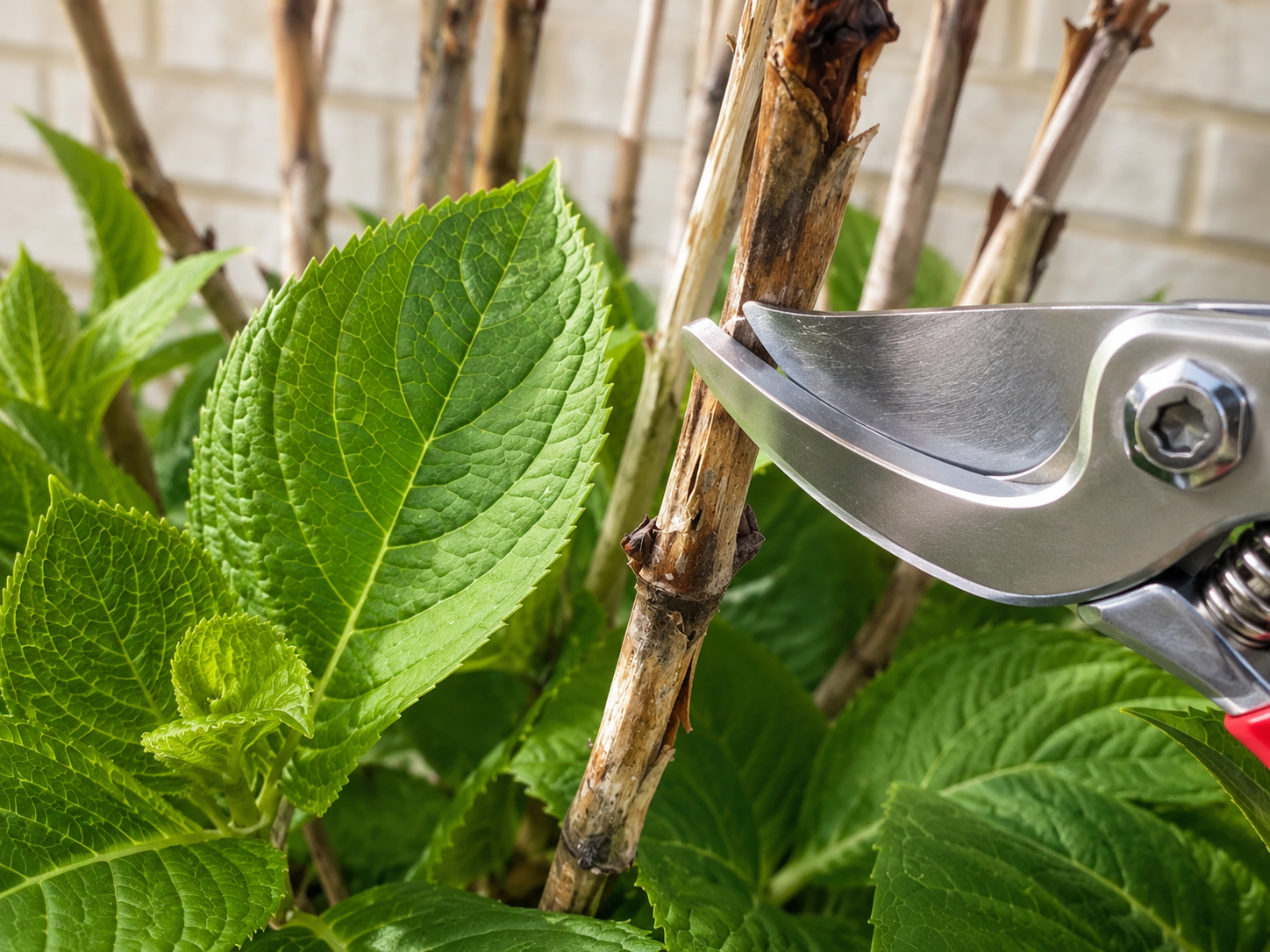
How to Prune Hydrangeas Without Cutting Off This Year’s Blooms
Pruning hydrangeas can feel intimidating—especially when one wrong cut can remove the buds that would have become this year’s flowers. The good news is that hydrangea pruning becomes much easier once you know whether your plant blooms on old wood, new wood, or both.
In this guide, I’ll show you how to identify what kind of hydrangea you have, when to prune it, and exactly what to remove so you can tidy the plant without sacrificing its blooms.
First, Identify Which Type of Hydrangea You Have
Before reaching for your pruners, identify which type of hydrangea is growing in your garden. Some hydrangeas form their flower buds on stems produced the previous year, while others bloom on fresh growth produced during the current season. Pruning at the wrong time can remove those developing buds before they ever have a chance to flower.
Hydrangeas That Bloom on Old Wood
Old-wood hydrangeas form next year’s flower buds on stems produced during the previous growing season. Those buds remain on the plant through winter, which means cutting the stems back in fall or spring can remove the flowers before they ever open. Traditional bigleaf hydrangeas—including many mophead and lacecap varieties—as well as mountain and oakleaf hydrangeas generally bloom on old wood.
When to prune: If shaping is needed, prune old-wood hydrangeas shortly after they finish flowering, before they begin setting buds for the following year. In spring, limit pruning to removing flower heads and stems that are clearly dead. Avoid cutting healthy stems down simply because they look bare—those stems may already be carrying this year’s flower buds.
Hydrangeas That Bloom on New Wood
New-wood hydrangeas produce their flower buds on fresh stems that grow during the current season. Because the buds have not yet formed during winter, these plants can usually be pruned in late winter or early spring without sacrificing summer flowers. Panicle hydrangeas and smooth hydrangeas—including varieties such as Limelight, Bobo, Little Lime, and Annabelle—bloom on new wood.
When to prune: Prune new-wood hydrangeas in late winter or early spring, before vigorous new growth begins. Remove weak, damaged, or crossing stems first, then shorten the remaining healthy stems as needed to shape the shrub and encourage strong growth. Avoid cutting every stem to the ground unless that pruning method is specifically recommended for your variety.
Hydrangeas That Bloom on Both Old and New Wood
Some reblooming hydrangeas can produce flowers on both the previous year’s stems and fresh growth from the current season. This gives them a better chance of flowering even when old stems are damaged by winter. However, pruning them too aggressively can still remove their earliest blooms, so it is best to use the same cautious approach you would use with an old-wood hydrangea.
When to prune: In spring, remove only spent flower heads and stems that are clearly dead. If the shrub needs reshaping, wait until after its first flush of flowers and prune lightly rather than cutting the entire plant back.
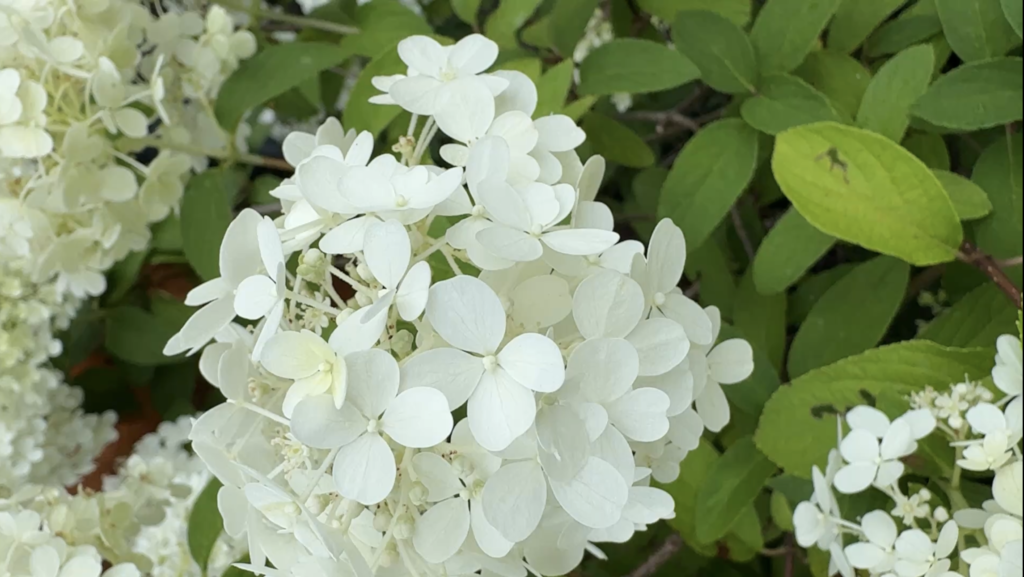
How to Prune Hydrangeas Without Removing Flower Buds
Once you know how your hydrangea blooms, pruning becomes much less intimidating. The goal is not to cut the entire shrub back automatically, but to remove only what is dead, damaged, crowded, or out of proportion while protecting healthy stems that may be carrying flower buds.
Step 1: Remove Dead or Damaged Stems
Begin by inspecting the plant from the base upward. Remove stems that are broken, brittle, hollow, or clearly dead, cutting them close to the base of the plant. When you are uncertain, lightly scratch a small area of bark with your fingernail. Green tissue underneath usually means the stem is still alive, while dry brown tissue indicates that it is dead.
Step 2: Remove Spent Flower Heads Carefully
Follow each faded flower head down the stem until you find the first healthy pair of buds. Make your cut just above those buds, leaving the healthy stem intact. This light deadheading removes the old bloom without cutting away the growth that may produce this year’s flowers.
Step 3: Thin Crowded or Crossing Stems Sparingly
Look for stems that cross, rub against one another, or grow inward toward the center of the shrub. Remove only the weakest or most awkwardly positioned stems, cutting them near the base. Avoid thinning too aggressively—especially on hydrangeas that bloom on old wood—because healthy stems may already be carrying flower buds.
Step 4: Shape the Shrub Conservatively
After removing dead, damaged, and crowded growth, step back and look at the shrub before making any more cuts. If shaping is still needed, shorten only the longest or most awkward stems, cutting just above a healthy pair of buds or removing the entire stem at the base. Avoid shearing the hydrangea into a uniform mound—selective cuts preserve its natural shape and reduce the risk of removing flower buds.
The Safest Way to Prune a Hydrangea
When you are unsure what type of hydrangea you have, the safest approach is to prune conservatively. Remove only spent flowers and stems that are clearly dead, then wait for the plant to leaf out before making additional cuts. Once you know whether it blooms on old wood, new wood, or both, you can prune with confidence without sacrificing the flowers you have been waiting for.