
4 Roses That Are Hard to Kill (Even for Beginner Gardeners)
Photo by Naoki Suzuki on Unsplash
Roses have a reputation for being beautiful but demanding—but some varieties are surprisingly forgiving. If you love the look of roses but don’t want to spend the entire growing season worrying about black spot, constant pruning, or whether one mistake will ruin the plant, starting with a resilient variety makes all the difference.
These four roses have earned a place on my list because they combine beautiful blooms with dependable garden performance. From the easygoing Knock Out® and At Last® roses to the romantic Olivia Rose Austin and Lady of Shalott, each offers something a little different while still being a strong choice for gardeners who want roses that are easier to grow and harder to lose.
1. Knock Out® Rose
If there is one rose I would recommend to someone who is nervous about growing roses, it is the Knock Out®. This shrub rose became popular for a reason: it flowers repeatedly, tolerates less-than-perfect conditions, and was specifically bred for strong disease resistance.
The original Knock Out® produces cherry-red to hot-pink flowers from spring until the first hard frost and grows into a rounded shrub about 3 to 4 feet tall and wide. It is also self-cleaning, which means you do not have to constantly deadhead spent blooms to keep it flowering. The breeder lists it for USDA Zones 5–11.

For gardeners who love roses but don’t necessarily want roses to become a hobby of their own, this is a particularly forgiving place to start. Give it plenty of sun, reasonably well-drained soil, and regular watering while it establishes, and it will generally reward you with months of color.
Why it made my list: dependable flowering, excellent disease resistance, minimal deadheading, and a remarkably forgiving nature.
2. At Last® Rose
At Last® is for the gardener who wants some of the romance of a traditional rose without quite as much fuss. Its fully petaled, sunset-apricot flowers have a noticeable fragrance—something many easy-care landscape roses lack.
It stays relatively compact at approximately 2½ to 3 feet tall and wide and blooms repeatedly from late spring through frost. Proven Winners classifies it as an easy-maintenance, disease-resistant shrub rose for full sun and currently lists it for Zones 4–9. Deadheading is optional rather than necessary for repeat flowering.
One caveat is worth mentioning: disease resistance does not mean disease-proof. Rose performance varies considerably with climate, rainfall, airflow, and growing conditions, and some gardeners in humid areas report black spot on At Last®. I still think it belongs on this list because it combines fragrance, repeat bloom, compact growth, and comparatively simple care—but I would never describe any rose as completely trouble-free.
Why it made my list: fragrance, beautiful apricot color, compact size, repeat flowering, and easier care than many traditional highly petaled roses.
3. Olivia Rose Austin®
If you love the layered, romantic appearance of an English rose, Olivia Rose Austin® is an excellent bridge between beauty and practicality.
Its soft pink flowers open into deeply cupped rosettes and have a light-to-medium fruity fragrance. Unlike roses grown primarily for show-stopping flowers at the expense of everything else, Olivia was also bred to form a balanced, healthy shrub. David Austin describes it as a “very healthy, well-balanced shrub” that begins flowering early and continues in flushes well into fall. It reaches approximately 4½ feet tall by 3½ feet wide and is listed for Zones 5–11.
This is the rose on the list for someone who wants that unmistakable English-garden look but is hesitant to take on a particularly temperamental rose.
Why it made my list: excellent shrub health, repeat flowering, romantic flower form, and the classic David Austin look without choosing one of the fussier varieties.
4. Lady of Shalott®
Lady of Shalott® is the boldest rose on this list. Rich orange-red buds open into large chalice-shaped flowers with shades of orange, salmon-pink, and golden yellow. It has a warm tea fragrance with notes that David Austin describes as reminiscent of spiced apple and cloves.
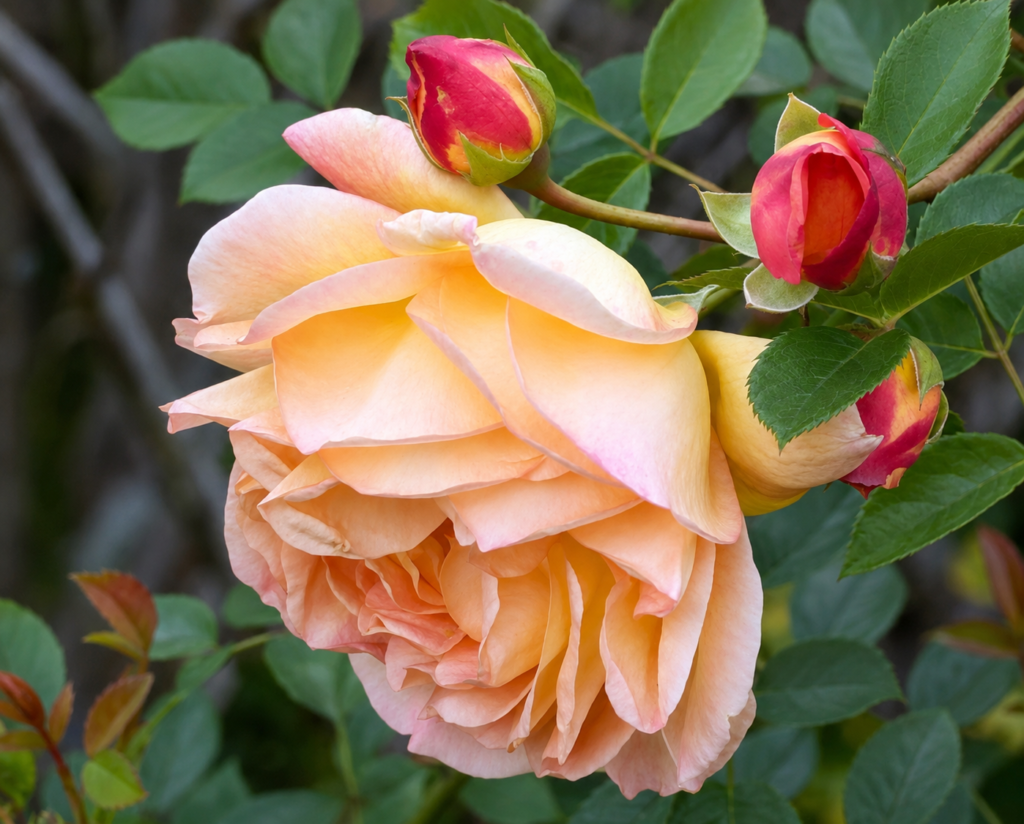
It is also a vigorous grower, eventually forming a substantial shrub around 5 feet tall and 4 feet wide. It repeat flowers, tolerates full sun or partial shade, and David Austin currently lists it for Zones 4–11.
Because it grows larger than the other roses on this list, give Lady of Shalott room to develop rather than squeezing it into a small border. Its slightly arching growth is beautiful in a cottage-style planting where the plant can take on a relaxed, natural shape.
Why it made my list: vigorous growth, cold hardiness, repeat flowering, and spectacular color without needing the pampering people often associate with English roses.
Which Easy-Care Rose Should You Choose?
These four roses aren’t identical—and that’s exactly why I like this group.
Choose Knock Out® when durability and nearly nonstop color are the priority. Choose At Last® when you want an easy landscape rose with fragrance. Choose Olivia Rose Austin® for soft pink, densely petaled English-rose beauty, and choose Lady of Shalott® when you want something larger, warmer in color, and a little more dramatic.
No rose is truly impossible to kill, and even disease-resistant varieties can struggle when planted in the wrong conditions. But choosing a naturally vigorous, well-adapted variety gives you a much better starting point than choosing a rose simply because the flower looks beautiful on the tag.
A Good Rose Doesn’t Have to Be a Difficult Rose
Growing roses becomes much less intimidating when you begin with the right plant. Give them adequate sunlight, good drainage, consistent water while they establish, and a little seasonal care, and these varieties can provide years of flowers without requiring you to organize your entire garden around keeping them alive.
And perhaps most importantly, don’t assume you need to be an experienced rose gardener before planting your first one. Sometimes the best way to learn roses is simply to start with one that’s willing to forgive you.